Why now
AI developers now publish specs and constitutions and train their models against them, so character is increasingly shaped on purpose. Models are also taking on longer and more autonomous tasks, where character decides more of their behaviour than instructions do. Yet independent checks of whether a model actually has the character it was meant to have barely exist. We are building them.
Research directions
- Independent evaluations of frontier models, tracking character across labs and successive releases
- Stated vs actual character, i.e. whether what a model says about itself predicts what it does in realistic environments
- Character in agentic and multi-agent settings, over long tasks and when many agents interact
- Adherence to the constitutions and model specs that developers publish
- How training shapes character, using models with known character to validate our evals
What we've done
Team
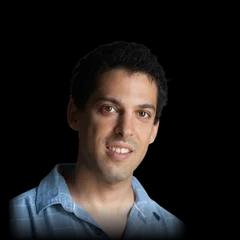
Lionel Levine
Co-founder
Professor of Mathematics at Cornell University, working on AI safety. Co-author of EigenBench (ICLR 2026 oral), a comparative measure of value alignment and character in language models, and of the FrontierMath benchmark.

Jinzhou Wu
Co-founder
Computer Science student and College Scholar at Cornell University, researching AI safety and alignment and how AI compares with human cognition.

Sergei Smirnov
Co-founder
AI safety research engineer working on AI evaluations and alignment, with 5+ years in production ML, including as a founding engineer. Doctoral researcher at the University of Helsinki and research fellow at SPAR and MARS. Built CivAI's AI Values demo.

Avani Gupta
Co-founder
AI Engineer at MBZUAI, working on interpretable control of model representations and pro-social behaviour in multi-agent systems. Publications at NeurIPS, ICCV and EMNLP, and a contributor to Med42, a 70B clinical LLM.
Get in touch
If you want to work on AI character evaluations, or have questions or ideas, get in touch at mg1sergey@gmail.com.